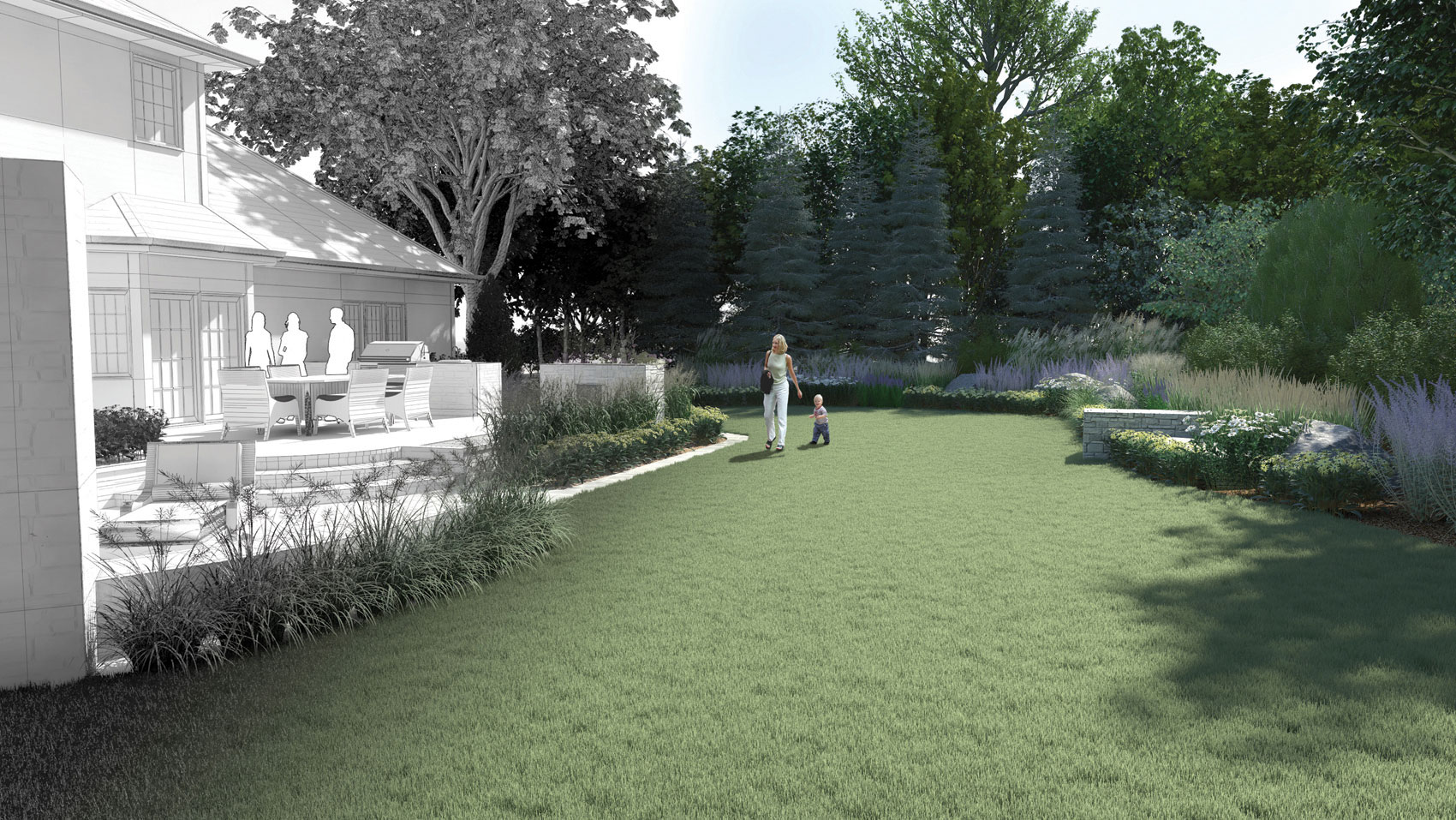
The elements of landscape design include mass, form, line, texture and color. In landscape design, these elements transform space and create a unique and exceptional experience.
- LINE – Lines can be vertical, horizontal, diagonal or curved. Lines are used in landscape design to accentuate an object, control movement or draw attention to a focal point such as a fire pit or water fountain. A walkway or garden path with a direct route to a focal point naturally draw a person to that area, while a walkway that meanders will create a feeling of surprise.
- FORM – Forms are associated with three-dimensional objects such as plants. A rounded plant can give a landscape a flowing and natural feel, while an upright plant can give you a more rigid and formal feel.
- COLOR – Color tends to be the most used landscape design elements. Warm colors include reds, yellows, and oranges. Cool colors include blues, greens and purples. Warm and cool color combinations creates different visual impacts on the landscape. Color plays an important design role for both plants and hardscape.
- TEXTURE – Texture is a surface feature that can be divided into three categories: Coarse, Medium and Fine. Plants, pavements and other site elements all have their own texture. Contrasting those textures often creates an interesting landscape and should be an important design composition.